

Round 1 · ŘíčanyDivision 1
Analysis
Beyond the podium: What the 1st Division opener told us about the title race
Read the full article →
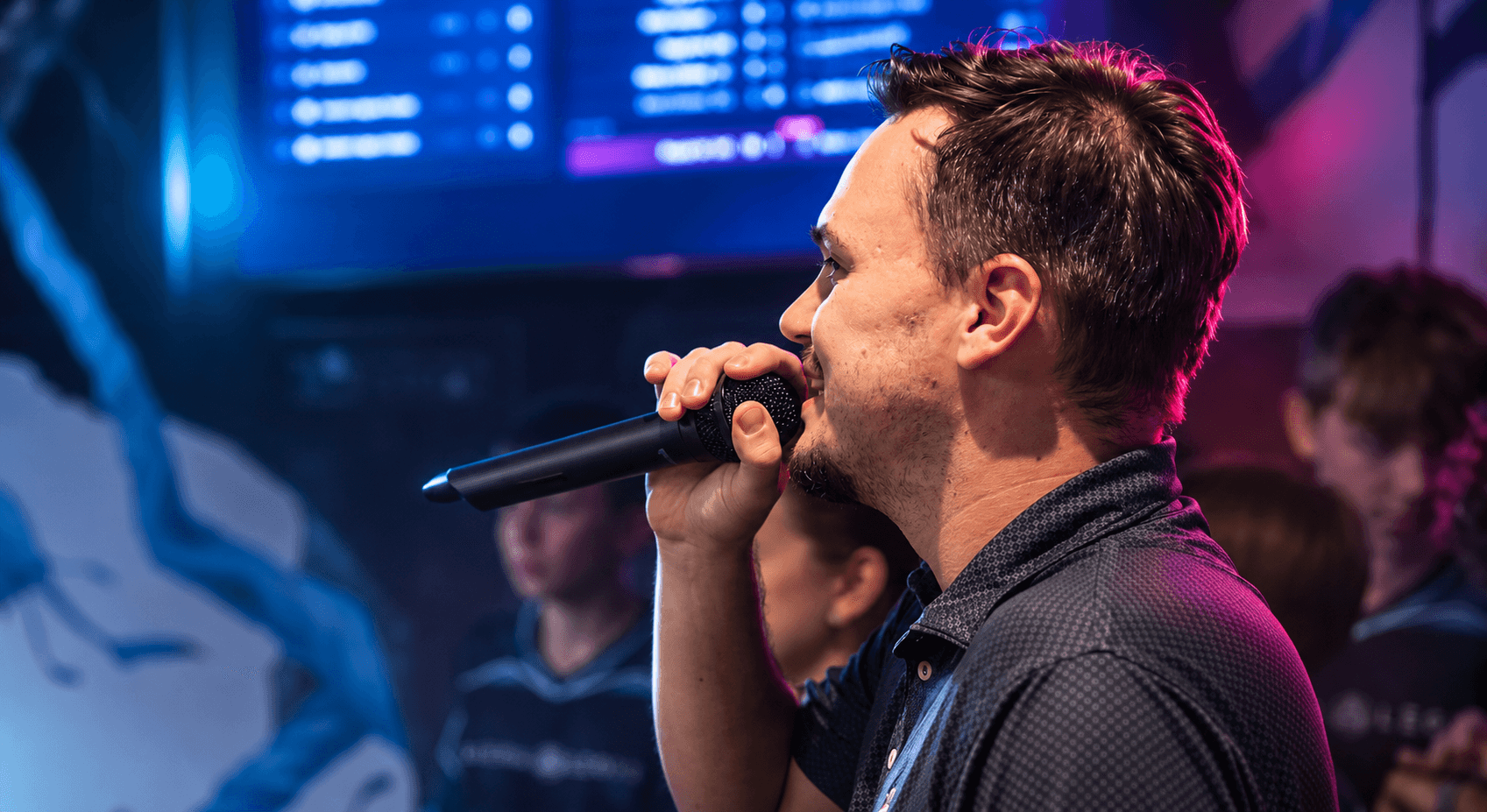
Eighteen teams competed under identical conditions during the Czech Laserball League's opening weekend. Yet the differences in possession, defensive organization and attacking decisions revealed just how much changes between the two competitive levels.
There was something particularly revealing about the Czech Laserball League's inaugural weekend in Říčany. Saturday's 2nd Division and Sunday's 1st Division played on exactly the same arena layout, using the same 6v6 format and match rules. Both tournaments featured nine teams, 36 group-stage encounters and four playoff matches. With the playing conditions unchanged, the weekend offered a rare opportunity to compare how teams at different competitive levels approached the same challenges.
The results produced two unbeaten champions, with Bagrýk 34 winning all ten matches in the 2nd Division and Tutli recording nine victories and a draw to take the 1st Division gold. Their dominance looked similar on paper, but the matches themselves told a more complicated story. Differences emerged in the way players protected possession, organized their defense and exploited the arena's obstacles, particularly when facing opponents capable of recognizing and disrupting their plans.
Perhaps surprisingly, the overall scoring figures were almost identical. The 1st Division produced 336 goals across its 40 matches, averaging 8.40 per game, while the 2nd Division recorded 338, an average of 8.45. The difference was not the total number of goals, but how those goals were distributed and, more importantly, how they were created.
One of the clearest distinctions emerged in midfield, where maintaining possession became a very different challenge depending on the opposition.
In Saturday's 2nd Division, several experienced players were able to control long passages of play simply by holding the ball in difficult-to-reach positions. Karol of Kočičí démoni was perhaps the most striking example, repeatedly protecting possession near the blue alley while opponents struggled to decide how many players to commit to retrieving it. In one encounter against Aurora Legion Yellow, her possession statistics were exceptional, with prolonged periods in which the opposition could neither recover the ball nor create a meaningful attacking opportunity.
Mrejk used a similar principle for Bagrýk 34, although with a more aggressive purpose. Rather than simply slowing the game, he retained possession until Mejval and Mrazík could move into favorable positions, then released the ball to initiate rapid attacks. Triman performed a comparable role for SK Domažlice, giving the team's faster players time to prepare their runs.
These approaches were particularly effective against teams that struggled to organize an active midfield press. Leaving their defensive positions to challenge the ball-carrier meant creating space for opposing attackers, yet refusing to pursue possession allowed the team holding the ball to dictate the pace. Several less experienced lineups found themselves caught between those two options.
Sunday's 1st Division made that balance considerably harder to maintain. The leading teams were generally quicker to recognize familiar holding positions and more coordinated in the way they closed them down. Players could still retain possession for extended periods, but doing so required more movement, better support from teammates and an understanding of where the next defensive challenge would come from.
Tutli's midfielders Mihálec and Dapar repeatedly combined possession with active pressure, while Lama Vojta performed a similar organizational role for Lamčany. Flying Eagles demonstrated another effective approach, moving the ball through coordinated passing sequences rather than relying on a single player to retain it. In one particularly impressive attacking move, Chrissie, Chrome, dohold and Yorn combined to progress from a defensive clear to a goal in less than 17 seconds.
It would be an oversimplification to suggest that 2nd Division teams relied exclusively on holding the ball while 1st Division teams relied on passing. Bagrýk 34 demonstrated excellent attacking coordination on Saturday, and several 1st Division players were highly effective at slowing possession on Sunday. The more meaningful distinction was the level of pressure opponents could apply. At the higher level, possession was more frequently contested by coordinated groups rather than isolated individuals, reducing the time available to make decisions.
The league's 6v6 format makes the distribution of players between defense, midfield and attack particularly important. With fewer players available to cover the arena than in older seven-player formations, every additional defender comes at a cost elsewhere on the field.
Several 2nd Division teams approached that challenge conservatively. Aurora Legion Purple, Aurora Legion Yellow and Fénixové frequently committed three or more players to protecting their target, limiting the number available to challenge possession farther forward. While this made some direct attacks more difficult, it also created problems when their defenders recovered the ball.
Without enough teammates positioned in midfield, defensive clears often became difficult to complete. Passes fell short, were intercepted or reached opponents already waiting near the target. Teams with effective attacking pressure, particularly Bagrýk 34, repeatedly punished those situations by collecting the loose ball and immediately launching another attack.
The strongest 1st Division teams generally accepted greater defensive risk in exchange for more influence over midfield possession. Tutli offered the clearest example, frequently leaving Gauc_cz as the primary defender while committing additional players forward. His ability to survive coordinated attacks and distribute the ball effectively allowed the team to maintain pressure without repeatedly sacrificing its defensive stability.
Other teams also benefited from reliable individual defenders. Atlas played an important role for Flying Eagles, while Kirito and Nosál contributed to Enforcers' strong defensive performances. Their positioning and timing made it possible for teammates to challenge the ball earlier, rather than waiting for attacks to reach the target.
The difference was not simply that using fewer defenders is always better. A single defender who cannot withstand coordinated attacks may leave a team more vulnerable than a conservative formation. What distinguished the stronger systems was the confidence to allocate players where they could have the greatest influence, knowing that the remaining defenders could handle the resulting responsibility.
That confidence came from individual ability, but also from communication, positioning and familiarity with teammates' movements.
The redesigned Říčany arena presented the same obstacles to both divisions, but the ways teams used them revealed another important distinction.
On the Green side, half-height cover and the elevated obstacle known as "hory" created opportunities for players with different physical strengths. In the 2nd Division, Kobry a Užovky's Šmoula repeatedly exploited his height to see and shoot over obstacles that concealed shorter opponents. His ability to control those angles contributed to several outstanding scoring performances, including six goals against Chaos Protocol.
Other attackers relied more heavily on speed. SK Domažlice's Killer Elmo and Botwea produced exceptionally fast attacking runs, while Bagrýk's Mrazík and Mejval repeatedly overwhelmed defenses through aggressive movement and direct approaches to the target.
Those techniques could be effective against opponents who reacted too slowly or failed to cover the relevant shooting lanes. In Sunday's 1st Division, however, the leading defenses were often better prepared for straightforward attacks, forcing players to approach the same obstacles differently.
Hunter of Aurora Legion Black and Ladva of Lamčany were among those who exploited low positions behind the Green side's barriers. By clearing an elevated defender and then immediately crouching beneath the surrounding cover, they could disappear from the sightlines of players attempting to recover their positions. David and Tonda of Aurora Legion Blue also demonstrated the value of these approaches.
Tutli's Ziki took the principle even further, repeatedly exploiting a particularly difficult defensive angle directly beneath the target. The position became so closely associated with him that commentators nicknamed it the "Zikiki". It contributed to one of the weekend's standout individual performances, including seven goals in a single match against ŠtramáciČB.
A similar distinction appeared around players waiting near an opponent's target. In the 2nd Division, attackers such as PrasoPes could sometimes remain unchallenged long enough to capitalize on a misplaced clear. In the 1st Division, those positions were generally monitored more actively, making isolated lurking attacks less reliable against the strongest teams.
Instead, attacking players often needed to coordinate their movements to draw a defender's attention in one direction while creating an opening elsewhere. Legion Black used this approach effectively, with players such as Fíla and Barbeque occupying defenders while Hunter or Tobi attacked from another angle.
The underlying lesson was that speed and positioning are not competing qualities. At the highest level, the most effective attacks often combined both, using movement to create an advantage and then exploiting it before the defense could recover.
Perhaps the most interesting comparison came from players who competed on both days. Mrejk, Atlas and Thomiiik each moved from Saturday's 2nd Division tournament into Sunday's 1st Division, providing a direct illustration of how their roles and opportunities changed against different opponents.
Mrejk had been one of Bagrýk 34's most influential players during their perfect Saturday campaign. His ability to control the ball in midfield gave Mejval and Mrazík time to establish attacking positions, and he repeatedly created scoring opportunities through patient possession. On Sunday, playing as a substitute for ŠtramáciČB, he encountered considerably more immediate pressure. According to his post-match account, opponents closed him down much more aggressively whenever he took possession, forcing him to adjust his approach.
Rather than relying on prolonged holding, Mrejk became more involved in direct transitions and opportunistic attacks. His last-second winner against Flying Eagles was particularly consequential, eventually helping ŠtramáciČB qualify for the semifinals. Having won gold in the 2nd Division, he finished the weekend with an additional fourth-place result in the 1st.
Atlas experienced a different kind of transition. Playing for Flying UHU on Saturday, he contributed both defensively and offensively, combining strong blocking statistics with possession and attacking play. On Sunday, he joined Flying Eagles and took on a more defensive role against stronger opposition.
His effectiveness nevertheless carried over. Atlas produced several outstanding defensive performances, including an impressive display against Flying Tymozzo, and even troubled eventual champions Tutli with two solo attacking runs from defense. His weekend demonstrated that certain abilities, particularly defensive positioning, reading the game and timing a clear, remain valuable regardless of the division.
Thomiiik also adapted effectively to the higher level. After helping Chaos Protocol reach the 2nd Division playoffs, he joined Flying Tymozzo on Sunday and became an important figure in their midfield. His ability to disrupt opponents, retain possession under pressure and create chances for teammates remained evident, particularly in Flying Tymozzo's victory over Laser game Plzeň.
The three performances do not provide a definitive measurement of the gap between divisions. Their teams, positions and opponents changed, making direct statistical comparisons difficult. They do, however, illustrate an important point: players capable of recognizing and adapting to different situations can remain influential even when the level of opposition increases.
The opening weekend suggested that the biggest challenge facing teams moving toward the 1st Division may not be a lack of speed or individual scoring ability. Several 2nd Division players demonstrated exceptional attacking pace, defensive statistics and technical skill, and Bagrýk 34's dominant performance showed just how effective a well-organized team can be.
The greater challenge lies in how consistently those qualities can be applied against opponents who react more quickly, recognize familiar attacking patterns and put greater pressure on possession.
A player who can hold the ball unchallenged for most of a minute may find that opportunity disappearing against a coordinated midfield press. A defense built around several players protecting the target may struggle if the opposition repeatedly wins possession farther forward. An individual attacker accustomed to beating defenders through speed alone may need additional movement, communication and support to find the same openings.
None of these differences is insurmountable. The crossover performances showed that individual ability can translate between divisions, while the strongest 2nd Division teams already demonstrated several characteristics associated with successful 1st Division play. Bagrýk 34's midfield organization, Kočičí démoni's possession control and Kobry a Užovky's understanding of defensive geometry all offer foundations on which to build.
There is also an important limitation to the comparison. Both tournaments were played at Říčany, an arena particularly familiar to several of the leading teams. The next round in Kladno could reward different approaches, while the redesigned Domažlice venue will introduce another set of challenges. What worked best during the opening weekend will not necessarily prove equally effective throughout the season.
Still, the first two days provided a valuable indication of what separates effective individual play from consistently effective team play. The difference was rarely one spectacular skill or tactical trick. More often, it was the ability to make the right decision, coordinate with teammates and execute under pressure, repeatedly and throughout an entire match.
As the Czech Laserball League develops, those qualities may become increasingly important for teams competing for promotion and for those hoping to remain among the 1st Division's leading contenders.
The opening weekend showed that both divisions have the speed, talent and attacking ability to produce exciting laserball.
The difference lies in how effectively teams can use those strengths when their opponents are prepared for them.
Analysis
Analysis
Report