
Round 1 · ŘíčanyBoth divisions
Analysis
Same arena, different game: What separates the CLBL divisions?
Read the full article →
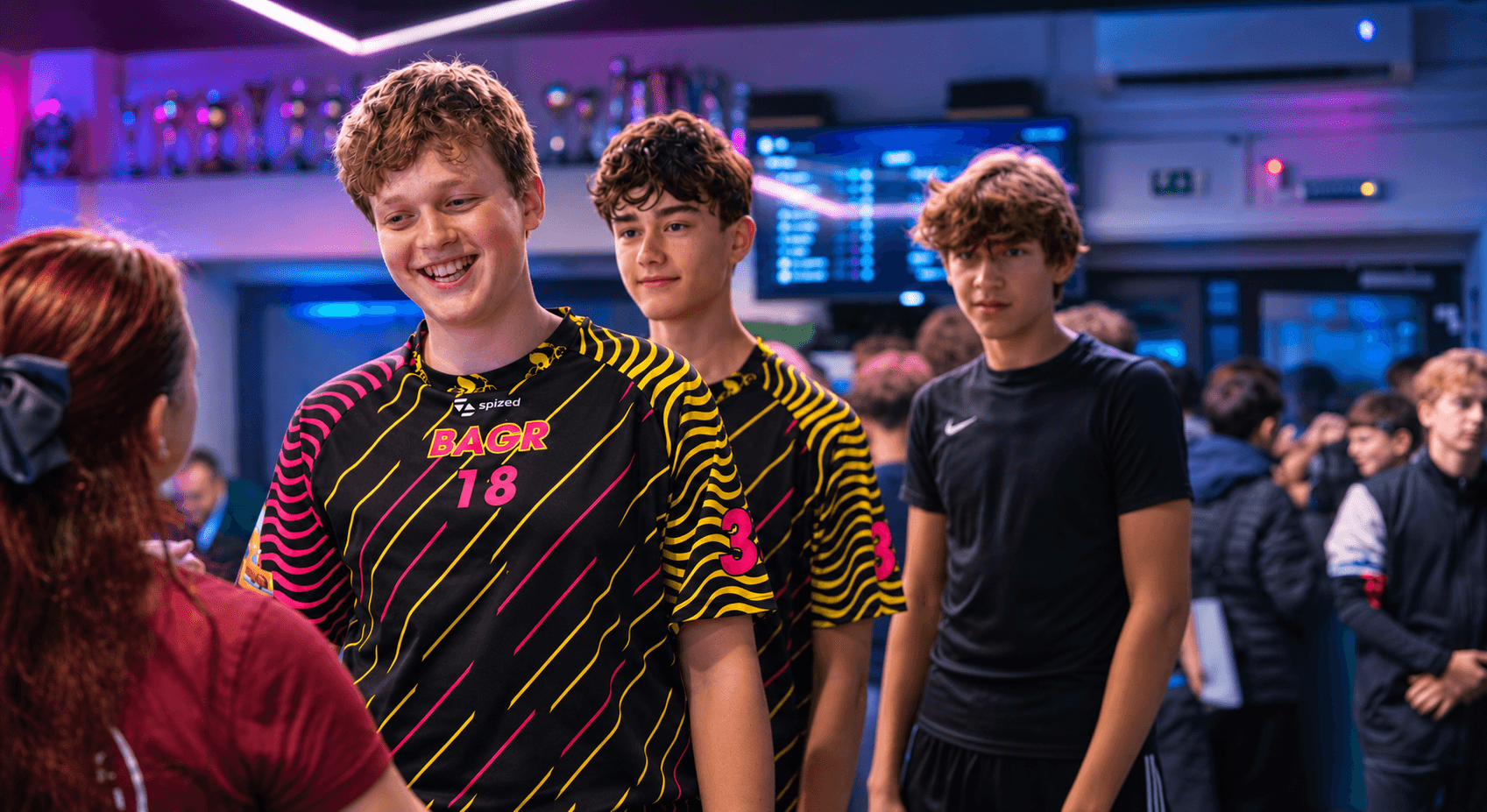
Bagrýk 34 dominated the results, but Saturday's opening tournament also revealed contrasting tactical approaches, unexpected challengers and several teams with room to grow.
Bagrýk 34's perfect record was the defining result of the Czech Laserball League's opening day, but the manner in which they achieved it was arguably more revealing. On an arena where some teams struggled to balance attacking movement with defensive coverage, Bagrýk repeatedly found the right moment to accelerate, using controlled possession to create opportunities for their fastest players. Their 85 goals across ten matches were the product of a system that combined patience in midfield with an unusually direct attacking style.
The tournament also showed that there is more than one way to compete effectively in the new 2nd Division. Kobry a Užovky used their experience of Říčany to exploit shooting angles and control space, while Kočičí démoni approached the game almost from the opposite direction, deliberately slowing possession to disrupt opponents' organization. The contrasting performances offered an early glimpse of the tactical variety that could define the promotion race.
Mejval and Mrazík were the most visible figures in Bagrýk's attacking game, regularly forcing their way through defensive positions with rapid movements and coordinated attacks. Mrejk, however, was central to making those opportunities possible. His ability to retain possession, disrupt opposition transitions and deliver the ball at the right moment allowed the two attackers to focus on finding openings rather than repeatedly recovering possession themselves.
That distinction became particularly important against stronger opponents. SK Domažlice briefly managed to disrupt Bagrýk's rhythm and take the lead, while Kočičí démoni used prolonged possession to limit the number of attacking opportunities available. In both cases, Bagrýk adapted without abandoning their basic approach. Their defensive unit, built around players including Phoenix and Matlafousek, also deserves substantial credit: the champions conceded just 16 goals across ten matches despite committing so many players forward.
Mrejk's performance was one of the standout individual contributions of the weekend. He recorded several impressive assist and defensive statistics during Saturday's tournament, then returned to the arena on Sunday as a substitute for 1st Division side ŠtramáciČB, helping them secure a semifinal appearance. It was an unusual weekend in which one player contributed to a gold medal in one division and a top-four finish in the other.
Kobry a Užovky finished second by making effective use of the arena's layout and their players' individual strengths. Šmoula was particularly dangerous around the Green side's half-height obstacles, where his height allowed him to see and shoot over cover that restricted shorter opponents. Cooper Works combined attacking quality with strong defensive performances, while Daník and captain Ellelnesan helped maintain possession and organize the team's movement.
Their semifinal victory over Kočičí démoni illustrated both their strengths and the areas that remain vulnerable. Kobry built a three-goal lead through aggressive play but came close to surrendering it when their opponents committed all six players forward. Cooper's decision to protect possession in the closing moments proved decisive. The final against Bagrýk, however, exposed a more fundamental problem: Kobry struggled to contain repeated high-speed attacks and were unable to impose their own tempo.
Kočičí démoni demonstrated how differently the same arena could be approached. Karol repeatedly held possession for extended periods, forcing opponents to choose between committing players to retrieve the ball and leaving their defense exposed. With Jardys providing stability near the target and Číla and Roi converting opportunities, the team was able to frustrate opponents that might otherwise have enjoyed a clear attacking advantage.
The most interesting moment came when that approach stopped working. Trailing Kobry late in their semifinal, Kočičí démoni switched from patient control to an all-out attack and nearly forced overtime. Their ability to play at both extremes of the tempo suggests there may be more to their game than their opening results revealed. The bronze medal was a solid starting point, but their tactical flexibility could make them a more dangerous opponent later in the season.
Chaos Protocol's fourth place was an encouraging outcome for a newly assembled Prague team. Tomík, Tsunami and Taxikář provided attacking movement, supported by the defensive work of Atreyu and Vampírkapetra. Their comeback against Aurora Legion Purple and victory over Flying UHU showed an ability to compete under pressure, although heavy defeats to the leading teams revealed the work still needed to develop consistency.
SK Domažlice arguably had the most frustrating tournament outside the podium positions. Killer Elmo and Botwea produced some of the fastest attacking plays of the day, with Triman and Emka 88 helping to control possession. Their narrow defeats to Kobry, Chaos Protocol and Bagrýk left them fifth despite demonstrating that they could challenge the division's strongest teams. Improving their results in close encounters will be essential if they are to move into promotion contention.
Sixth-placed Flying UHU also struggled for consistency despite individual quality from Atlas, Fala and their teammates. The German lineup could produce effective passing combinations and disciplined defensive performances, but was less comfortable against teams able to attack rapidly from multiple positions. Fénixové faced similar challenges with a more static defensive approach, although their draw against Flying UHU and the performances of Anet, Surikata and PrasoPes showed what they could achieve when their system held together.
The younger Kladno sides, Aurora Legion Purple and Yellow, found the opening round especially demanding. Both demonstrated speed and promising individual attacking ability, but frequently struggled to locate opposition ball-carriers and maintain defensive coverage in the relatively spacious Říčany arena. Purple's narrow victory over Yellow provided their only win, while Yellow finished without points. For both teams, the tournament was primarily an opportunity to gain experience against more established opponents.
Saturday's matches reinforced the importance of possession management in the 6v6 format. With fewer players available to cover every route, committing additional attackers to retrieve the ball can create significant defensive gaps. Players such as Mrejk, Karol and Triman exploited that balance in different ways, using ball retention either to slow matches down or to prepare coordinated attacks.
The physical layout also mattered. Taller players could exploit sightlines over the Green side's barriers, while smaller players sometimes benefited from being able to remain concealed behind the same obstacles. Teams already familiar with Říčany were generally better prepared to take advantage of those details, although the variety of approaches among the medalists showed that familiarity alone did not determine success.
The next round at Aurora Lasergame Kladno will provide a useful comparison. Its narrower layout changes the available attacking routes, defensive positions and reaction times, potentially rewarding teams that struggled in Říčany while testing the systems that worked so well for the leaders.
Bagrýk 34 have earned their position as the early favorites, but the opening round established only the first part of the promotion race. Kobry a Užovky and Kočičí démoni have already demonstrated that they can challenge through different tactical approaches, while Chaos Protocol and SK Domažlice have room to turn promising performances into stronger results. How those teams adapt away from Říčany could prove just as important as what they achieved there.
Analysis
Analysis
Report